

Sweet Itch a common problem in horses
As we start to see the benefit of the lovely spring weather and the hope of long summer evenings, we begin to be reminded of the presence of our insect population. Of course, the midge is synonymous with summers on these shores, and with their growing presence comes the seasonal issue of “sweet itch”.
What is Sweet Itch?
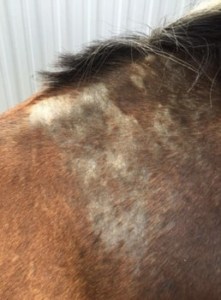 Sweet itch is the most commonly seen allergic form of dermatitis in horses. It occurs as a result of a hypersensitivity to insect bites, typically the midge (Culicoides), which are most active during late Spring, Summer and early Autumn months. It is not the bite itself that they are allergic to, but rather certain irritants or proteins in the saliva of these insects. This results in itchiness, which we refer to as pruritis. Like having an allergic reaction ourselves, the affected individual would have an unpleasant feeling on their skin, causing them to scratch, rub or bite at the skin. In the UK, it is reported to affect about 5% of the equine population.
Although we can see sweet itch in horses and ponies of any age or breed, certain “native” breeds tend to be more affected. By this, I refer to breeds such as Welsh and Shetland ponies, Connemaras and Arabians for example. There have also been some theories that suggest a potential genetic susceptibility and the possibility that offspring from certain affected mares or stallions could be more at risk to developing this condition.
Signs and Symptoms of Sweet Itch
Affected horses most commonly show signs of sweet itch at the base of the mane and tail, and also on the face. The typical things we see in cases of sweet itch can include some or all of the following:
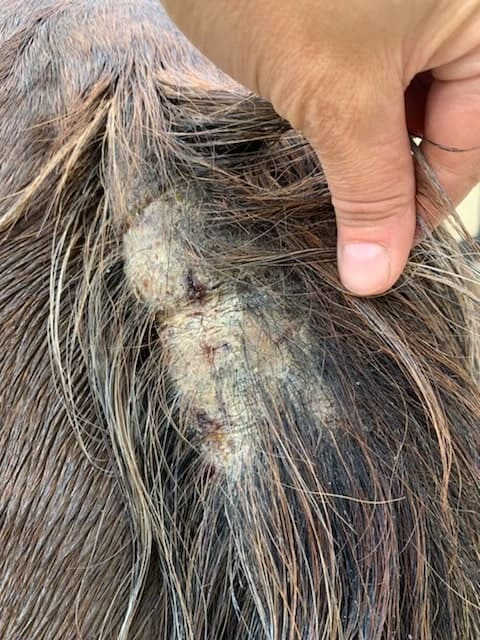
- A varying degree of itchiness, depending on how severely the individual is affected. This can vary from quite mild to an intense level of itchiness. Hair loss, in particular around the mane and tail.
- Excessive swishing of tail in an attempt to ward off and repel insects.
- Following periods of intense scratching, bald patches can develop. These may appear ugly and grey if skin has been sufficiently damaged and hair loss could be permanent.
- In very irritated areas, sores may develop. These can take the appearance of open and broken skin, which frequently will bleed.
- It is not uncommon to see some changes in the horses demeanour with many appearing agitated or restless. This can make riding or competing extremely difficult in affected individuals.
Management/Preventing Sweet Itch
Unfortunately there is currently no available cure for sweet itch and affected individuals tend to get recurrence of symptoms every year at first contact with biting insects/midges. As a result, it is important that we have some good management and control strategies aimed at preventing, or at the very least, reducing the potential exposure.
Keep affected individuals covered – the use of fly rugs or a specific sweet itch rug and face guard. These rugs generally have very fine holes that will prevent the midge from landing on the horse to bite.
Stable affected individuals from dusk till dawn, in particular if the weather is very hot and humid. Ensuring that stables are clean and dry is important to avoid creating an environment that may be conducive to the breeding of midges.
- When at pasture, it is better that they are kept in quite exposed fields that may have a good breeze, rather than close to wooded or wet areas where insects will be more likely to congregate.
- Regularly applying appropriate insect repellent. Topical applications containing the agent permethrin are useful but require regular application (as often as twice a day with 1% spray solutions).
- The availability of an insect horse collar (similar to a flea collar in cats and dogs) could offer some potential protection.
- In-feed supplements may provide some benefit to support skin health. In other animals suffering with similar skin conditions the addition of fatty acids (e.g omega 3 and 6) has shown a degree of benefit aiding the defective skin barrier. Early intervention and application of some, or all of these steps, can help in reducing the potential incidence and severity of sweet itch that we see.
What products are available to manage sweet itch in horses?
 In some cases, it may be necessary for a vet to prescribe some steroid medication if the itchiness is extremely severe. Steroids will typically only be used in a select number of cases in order to break the vicious cycle and prevent further damage that may lead to a secondary infection.
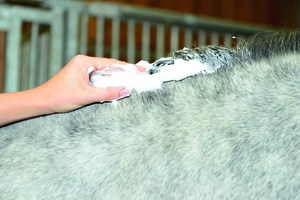
There are many commercial options available when it comes to topical applications such as Derbymed’s Cutasol. The objective of using these types of products is to soothe and ease the itchy/irritated skin whilst inhibiting the potential growth and development of bacteria, fungi and dermatophytes. Providing protection against further damage while also helping to repair the barrier function of the skin is an extreme advantage when selecting a topical product. Using these appropriately and at regular intervals will provide some benefit in the control of a case of sweet itch.
Whilst an off-the-shelf commercial vaccine is not currently available, there is much headway being made in this regard and there is a hope that this will be available very shortly. Current research in Switzerland is showing significant promise with a sweet itch vaccine that will hopefully provide a means of both treating and preventing sweet itch in the future.
Written by Dr. Ian Rountree, MRCVS
derbymed
Cutasol 300ML
Foam cream to care and regenerate damaged skin in cases of sweet itch
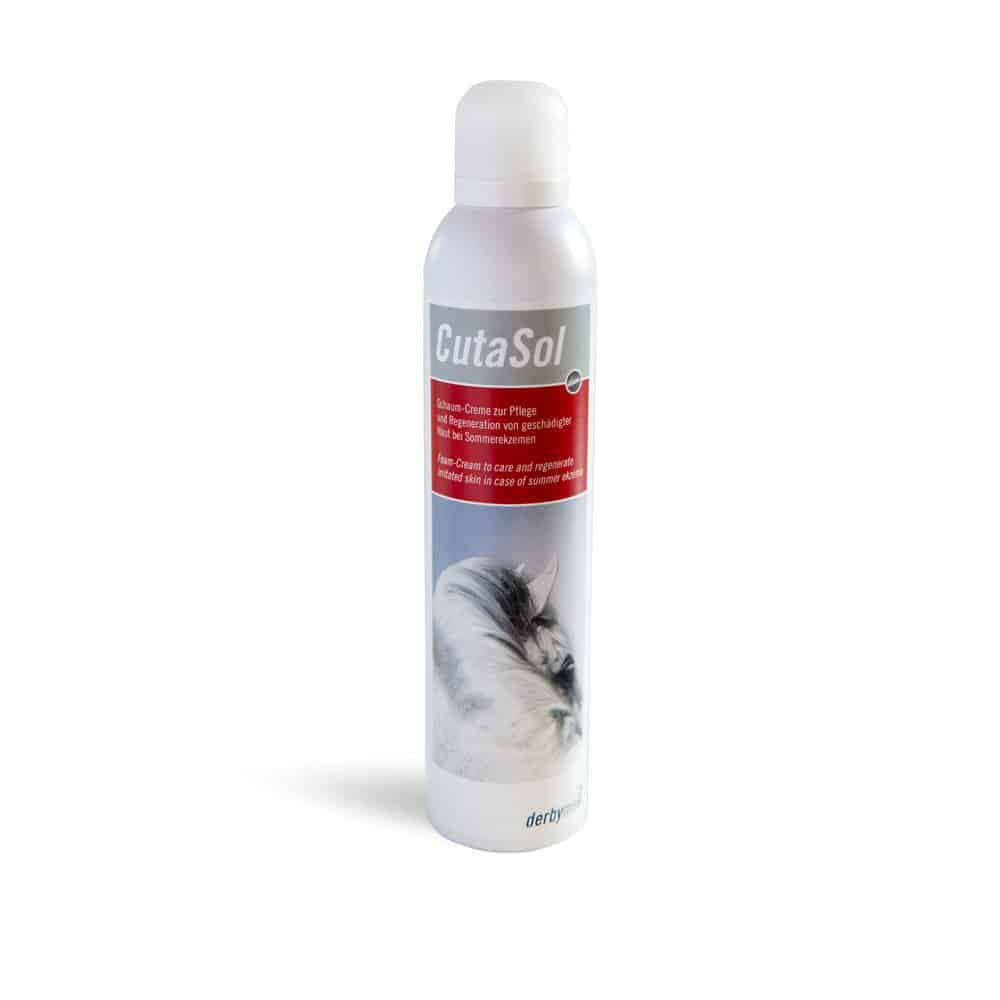 Cutasol’s unique technology restores and regenerates the barrier function of the skin, with skin permeable Lipids and Urea.
These skin permeable Lipids absorb into the lipid layer of the dry skin and contribute to the restoration of the damaged or irritated skin. This helps to reduce itching associated with sweet itch and accelerate the healing process. Urea increases the water content in the thickened outer layer of dead skin. This softens and soothes, as well as having antibacterial properties. Allantoin protects against dehydration.
A unique patented foam cream allowing for easy and accurate application on the skin. (300ml spray bottle gives 7-9 litres of foam)
To buy Cutasol click here


