

The horse has a digestive system unique among the domestic animal species.
It should really be thought of as being in two sections. The first consists of the stomach and small intestine, like that found in other monogastric animals such as the pig or dog. The second section consists of the large bowel which acts very much like the rumen of a cow, in providing a huge volume for bacterial fermentation of fibrous plant material and the absorption of the nutrients released by this microbial breakdown.
 The stomach of the horse, relative to the size of the animal, is the smallest of all the domestic species. It has a volume of only 10 litres and thus cannot store large amounts of food. The horse therefore is designed for fairly constant grazing of moderate amounts of food. This is what happens in the wild but is sometimes difficult to replicate in the domestic situation.
The stomach is acidic, which kills bacteria and prevents fermentation and gas production. The production of large amounts of gas in the confined space of the stomach would be dangerous, and could lead to rupture of the organ. The acid in the stomach is mixed thoroughly with the grazed forage which in the horse’s natural environment is constantly moving through the stomach. When horses are fasted for excessive periods of time this acid meets the lining of the stomach and can predispose to ulcer formation. It is estimated that 80% of thoroughbreds in training are affected by ulcers to some degree.
The small intestine is 20 metres long and is the main site of digestion in the modern performance horse. Enzymes are released from the pancreas which dismantle carbohydrate and protein into constituent parts which are then absorbed. Bile is released from the liver at a constant rate (horses have no gall bladder), breaking down dietary fats. The large intestine of the horse is where the digestive process changes from relatively simple enzyme-based to microbial fermentation. In the vast 150 litres of the caecum and large colon, bacteria ferment the tough structural starches such as cellulose and hemicellulose, producing volatile fatty acids which are absorbed by the horse and are further metabolised to produce usable sugars for energy. Without these helpful bacteria these forages could not be digested. After digestion is complete the remnants of undigested food are passed as faeces. The total time
taken for food to pass along the digestive tract is normally 2-3 days.
Impaction Colic
There are times however when problems arise with the digestive processes. Pain or discomfort in the gut is manifested as colic. The term ‘colic’ is just a description of what we see when a horse experiences abdominal pain from a gut condition. Signs vary from mild, where the horse may look round at its flanks or kick its abdomen with hind legs, to severe, where the horse is sweating, rolling and unable to stand due to extreme pain. There are many different gut conditions which cause colic but one of the commonest is Large Colon Impaction, where food material becomes ‘stuck’ in part of the large intestine. This causes gas to build up, food cannot move normally through the gut and the bowel becomes distended and stretched. This causes pain which is seen as colic.
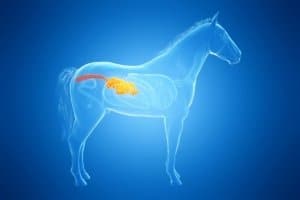 This type of colic is common due to a ‘design flaw’ in the large colon. The horse has a lot of bowel crammed into a muscular abdomen. There are several points where food passing through the large intestine must make quite tight turns to keep moving along. The most notorious of these points is the Pelvic Flexure, situated near the back of the abdomen, where the gut makes a 180 degree turn and to make matters worse reduces in diameter at the end of this turn. This means that if the forage moving along the bowel is too dry or bulky then there is a likelihood that it will become stuck. This is known as an ‘impaction’, and the resultant colic is called an impaction colic. The colic signs are usually mild to moderate and the vet will usually be able to diagnose a Pelvic Flexure Impaction via rectal examination, where a firm mass is felt on the left side of the abdomen.
Management of Impaction Colic
Most impactions can be managed medically, ie without surgery. Pain relief is given via iv injection and in most cases the impaction can be softened by administering water into the horse’s intestine via stomach tube. 6 litres of water administered on 4 occasions at 2-hour intervals is usually successful in softening the impaction sufficiently to allow it to pass on through the bowel. It is only rarely that abdominal surgery will be necessary.
After clearance of the impaction the horse will return to normal work with a close eye kept on the quality of the forage and ensuring the availability of plenty of fresh water at all times.
John Henderson MRCVS
For support with digestive health view our recommended products.
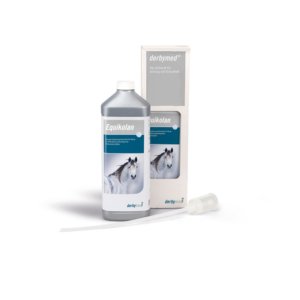
EQUIKOLAN 1L
To support normal digestive function
Equikolan is a unique combination of vegetable components and deactivated yeasts designed to support digestive functions.
Turmeric root soothes the stomach wall and bowel mucosa; reduces flatulence and constipation. Milk thistle and artichoke support the liver functions. Gentian root and rhubarb root boost the digestive process. Chamomile soothes the bowel mucosa and peppermint leaves and caraway seed reduce flatulence. Liquorice root soothes the stomach wall Celandine soothes irritated bowels. Yeast supports the recovery of the natural intestinal microflora and stimulates the immune system. derbymed’s Equikolan
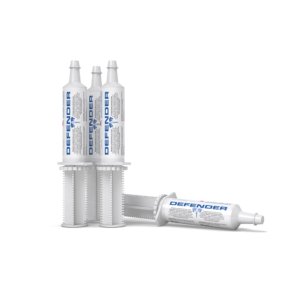
DEFENDER 100G
Support the digestive system during periods of intensive training, competition and transport
Defender forms a barrier over the gastroduodenal mucosa to maintain a healthy appearance and preserve it from the effects of acid secretion.
It helps reduce gastric acidity and minimise the effects of the reactions to stress.
Defender is available in 100G Syringe (oral paste).
ACME’s Defender
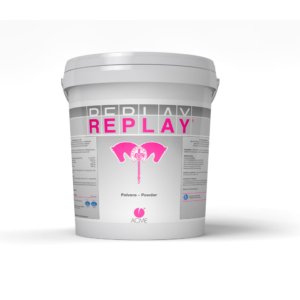
REPLAY 800G/100G
Probiotic and Prebiotic for digestive health
Replay supports the restoration of physiological gut flora. It is recommended in cases of gut flora imbalance caused by infectious diseases, enteritis, colic, constipation, antibiotic treatment and stressful events. Useful also for debilitated or immuno-depressed horses during or after periods of strenuous training, competitions and transportation.
Replay is available in three sizes: 800G bucket, and 100G Syringe (oral paste)
ACME’s Replay
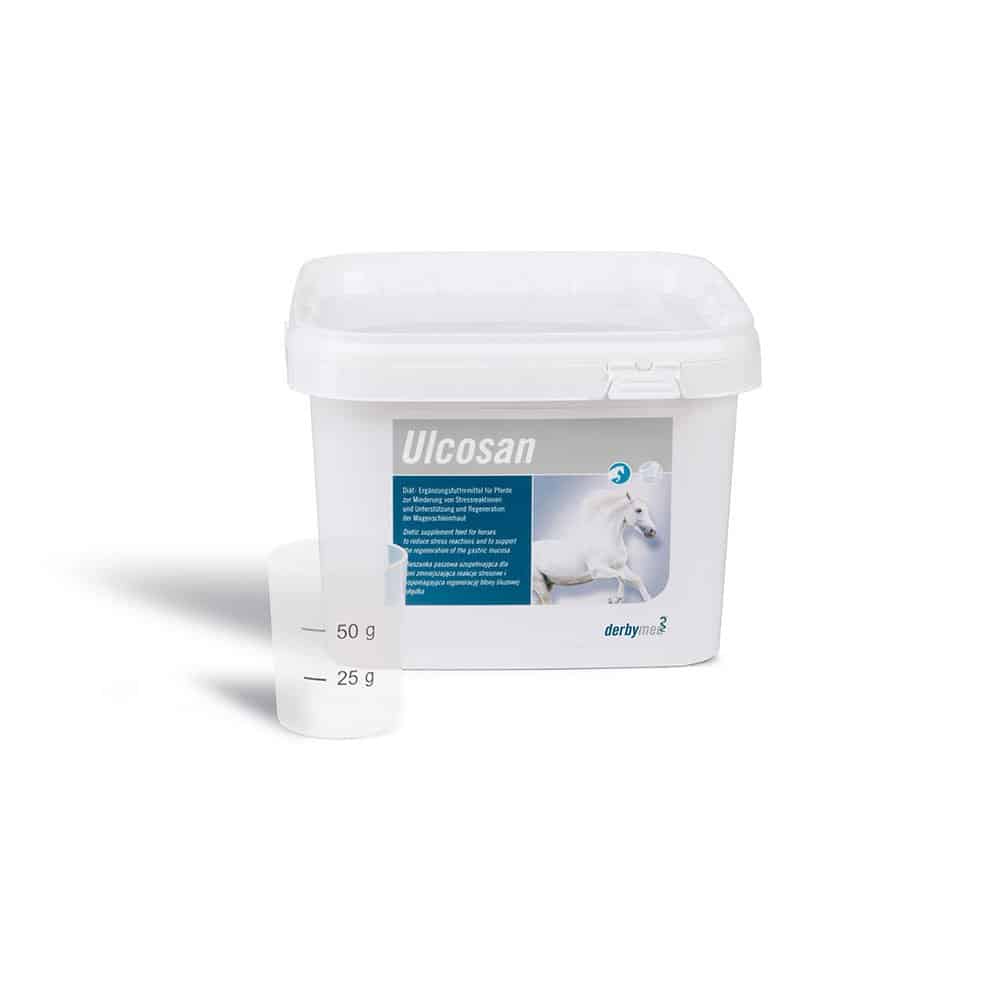
ULCOSAN 2.5KG
Support the digestive system from the effects of stress and dietary change
Ulcosan contains a unique blend of natural ingredients to maintain gastric health, soothe the stomach wall and support the balance of pH levels within the gut. Pectins of carrot and apple pomace build up a gel layer to coat the stomach wall and calm excess acid, helping to soothe stomach discomfort. Herbal ingredients (grape seed, milk thistle, yucca schidigera, licorice root) help to maintain a normal stomach environment. Magnesium Citrate and Tryptophan help reduce stress and help ease the associated symptoms of erratic behaviour. Pre and probiotic yeasts support the digestive processes and balance the bowel. derbymed’s Ulcosan


