
Introduction to the Horse Digestive System
The horse is unique among our domesticated animals and is known as a hindgut fermenter. However, the horse digestive system is a little more complicated than simply food goes in, and we’re left cleaning up the remains of what comes out the far end. Today, we plan to look at the overall process, and then in future articles we can better understand some of the processes that lead to disorders of the digestive system. Having a basic understanding of the digestive system is a big help when considering nutrition and management of your horse.
When assessing the horse digestive system, we must look at it in its entirety, but to simplify matters we can break this down to two distinct areas: the foregut and the hindgut. The foregut consists of: the mouth, oesophagus, stomach, and small intestine (including the liver and pancreas). The hindgut on the other hand consists of: the caecum, colon (both large and small) and rectum.
The Mouth
The parts of the mouth involved in digestion include the teeth, tongue, and salivary glands. The process of digestion begins as soon as food enters the mouth. The physical activity of chewing and grinding food into smaller particles is the first step in the digestive process. Chewing stimulates the production of saliva, which has a dual function in lubricating a bolus of food for passage through the oesophagus and the production of amylase, which begins the breakdown of carbohydrates. Saliva also has an important function as a buffer (but we will look at this in more detail throughout the series).
Oesophagus
The oesophagus is a muscular tube that facilitates the transfer of food from the mouth to the stomach and beyond where digestion continues. The muscle moves in such a way as to effectively push a bolus of food along its length. This movement is referred to as peristalsis. It is important that a bolus of food is both well lubricated and not too big to avoid the complication of choke. A one-way valve at the point where the oesophagus enters the stomach controls the movement of a bolus of food into the stomach and prevents it from being regurgitated. Horses lack a gag reflex and as such cannot vomit.
The Stomach
Through evolution, the horse has developed as a “trickle feeder” or continuous grazer, and thus has a small stomach relative to their size. Consequently, in the wild, horses will feed little and often and can graze for up to 16-17 hours per day. Food passes quickly through the stomach and into the small intestines and can empty in as little as 12 minutes.
The horse’s stomach is unique among monogastric animals and is clearly defined into two areas: glandular and non-glandular. A distinct border, known as the margo plicatus, clearly divides the two areas. The glandular portion of the stomach produces acid, hydrochloric acid, which plays a key role in the digestive process. This acid production is on a continuous basis and can cause an issue of ulceration in the non-glandular portion of the stomach if the stomach is empty for prolonged periods of time.
The Small Intestine
The small intestine is the longest part of the horse digestive system measuring up to 70 feet and consists of the duodenum, jejunum and ileum. Within the duodenum, release of enzymes such as carbohydrase, lipase and peptidase begins the breakdown of carbohydrates, fats, and proteins. These enzymes are produced in the liver and pancreas. The liver also continuously produces bile into the duodenum as the horse does not have a gall bladder to store bile.
The jejunum accounts for the largest proportion of the small intestine. It is here where the chemical breakdown of food is completed, and nutrients absorbed into the bloodstream. Absorption of nutrients continues in the ileum. The ileum also controls the passage of food into the caecum. At this point, food only consists of water and fibrous content. Passage through the small intestine can be quick and can be completed in as little as 3 hours.
The Caecum
The caecum has evolved to facilitate the fermentation process for the horse. Here, cellulose, and other fibrous materials are broken down and digested. The caecum’s flora (bacteria and protozoa) aids in this process and results in the production of volatile fatty acids, essential vitamins, and key amino acids. These gut flora are extremely sensitive and as a result, any changes in feeding should be implemented gradually to avoid potential problems.
The Large Colon
The large colon changes direction multiple times and at the same time its diameter decreases in size. This narrowing slows the passage through the large colon and facilitates further microbial digestion and resorption of a large volume of water. It is due to this slow passage and the anatomical presentation of the large colon, that horses are prone to developing impaction colic (we will likely refer to this more in the future).
The Small Colon
The primary function in the small colon, is the continued absorption of water and the formation of “faecal balls.”
The Rectum
The final 12 inches of the digestive system connecting to the outside.
The passage of food through the entire horse’s digestive system tends to be controlled by the size of meals being consumed and by the type of food. By this we refer to the fact that grass-based diets will pass more slowly than a diet consisting of high levels of grains or concentrates. The rate at which food passes through will also play a key role in the efficiency with which the horse absorbs and uses the key nutrients within feed.
The overall importance of this will be to aid in potentially maintaining gut health and potentially minimizing some of the disorders we commonly see with the horse’s digestive system (which we will attempt to examine over the forthcoming series).
Written by Dr Ian Rountree MVB
ULCOSAN 2.5KG
Support the digestive system from the effects of stress and dietary change
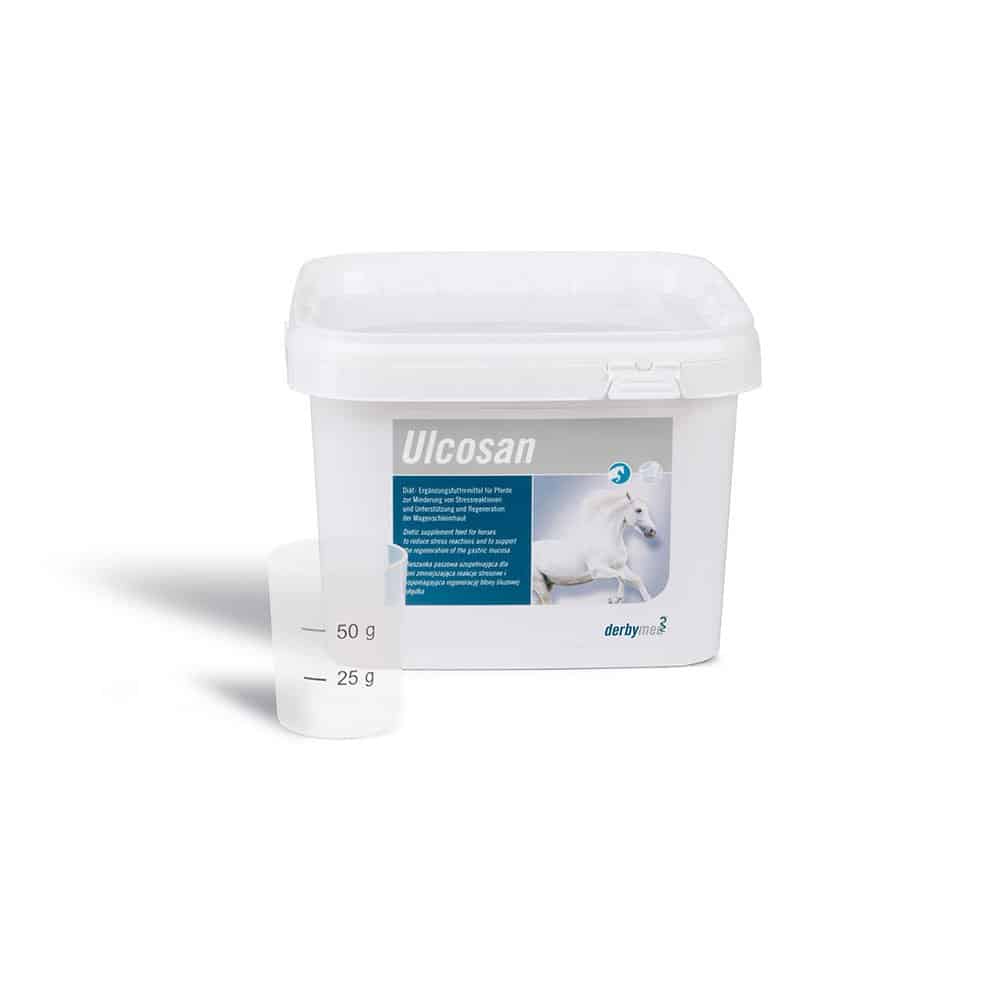
An advanced veterinary feed supplement to support digestive health and wellbeing.
Ulcosan contains a unique blend of natural ingredients to maintain gastric health, soothe the stomach wall and support the balance of pH levels within the gut.
Pectins of carrot and apple pomace build up a gel layer to coat the stomach wall and calm excess acid, helping to soothe stomach discomfort. Herbal ingredients (grape seed, milk thistle, yucca schidigera, licorice root) help to maintain a normal stomach environment. Magnesium Citrate and Tryptophan help reduce stress and help ease the associated symptoms of erratic behaviour such as stable vices, tooth grinding and weight loss. Pre and probiotic yeasts support the digestive processes and balance the bowel.
To buy Ulcosan, click this link


